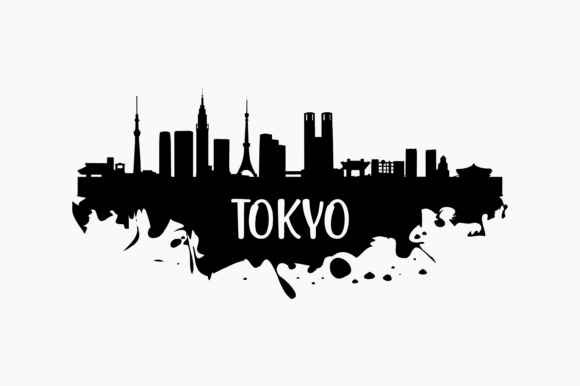
Tokyo Skyline Silhouette
A Designer’s First Look: Clean, Evocative, and Quietly Confident
When I opened Tokyo Skyline Silhouette for the first time, I didn’t see just a vector outline—I saw potential stitched in navy thread on a natural linen tote, or softened with matte black satin stitch on a charcoal sweatshirt. It’s not overly busy, not cartoonish, and avoids cliché cherry blossoms or anime tropes. Instead, it delivers a calm, architectural rhythm—Shibuya Crossing’s energy distilled into clean negative space, Tokyo Tower’s slender grace balanced against the low, steady mass of Shinjuku’s towers. As an embroidery designer who’s stitched hundreds of cityscapes, I appreciate how this silhouette trusts the viewer to recognize the city without spelling it out. That restraint makes it ideal for mature handmade products—not just novelty tees, but boutique merchandise where subtlety reads as intention.
How It Translates to Real Embroidery Projects
Last week, I prepped a custom order: a set of embroidered linen pillow covers for a Tokyo-themed nursery. I chose Tokyo Skyline Silhouette for the main accent—centered just above the hem, 3.2 inches wide. On screen, it looked crisp. In stitch? Even better. The clean outer contour held its shape beautifully in satin stitch, while the internal breaks (like the gap between Tokyo Tower and the adjacent buildings) gave breathing room—no dense fill stitch pooling or thread buildup. I used medium-weight cutaway stabilizer and a 4-inch hoop, and the result was smooth, dimensional, and unmistakably hand-finished—not digital, not generic.
It shines especially on structured, low-stretch fabrics: canvas totes, cotton twill aprons, midweight sweatshirts, and tea towels. I tested it on a lightweight baby onesie (100% cotton interlock), and while it worked with tear-away stabilizer and reduced density, I’d recommend keeping it above 2.8 inches wide there—smaller versions risk losing definition in the tower’s tip or the subtle curve of the Sumida River line. On curved surfaces like caps? It’s best placed front-and-center on the crown panel, not wrapped around the curve—those delicate verticals don’t distort well on tight radii.
Where Caution Is Needed—Not Flaws, Just Context
Tokyo Skyline Silhouette isn’t built for ultra-fine detail work. There’s no tiny text, no intricate window patterns or rooftop antennas—so it won’t satisfy someone seeking photorealism. That’s not a shortcoming; it’s smart design economy. But it does mean you’ll want to avoid pushing it onto very small hoops (<3 inches) or highly textured fabrics like bouclé or thick terry cloth without adjusting stitch density and underlay. On dark fabric, contrast is your friend: a bright white or warm ivory thread lifts the skyline with quiet elegance, while charcoal gray on black creates sophisticated tonal depth—just test your thread colors on scrap first.
Also worth noting: because it’s a single-layer silhouette (not an appliqué design with fabric backing or layered fills), it relies entirely on stitch clarity and edge definition. That means proper stabilizer choice matters more than usual—especially for stretchy knits or lightweight rayon blends. And if you’re planning holiday embroidery (think personalized Christmas stockings or New Year’s gift wraps), remember that frequent washing will affect longevity—stick to high-quality polyester thread and reinforce the perimeter with a light running stitch border if needed.
What It Adds to Your Craft Business—and What It Doesn’t Promise
As an Etsy seller and small shop owner, I’ve watched customers respond to Tokyo Skyline Silhouette in ways that go beyond aesthetics. It signals care—not just “I added a logo,” but “I chose something that feels rooted, intentional, quietly meaningful.” That builds trust. A customer buying a Tokyo-themed embroidered cap isn’t just buying headwear—they’re investing in a memory, a connection, a sense of place. This design supports that narrative without shouting.
It also scales gracefully across product types: same file works for a minimalist mug decal (using the PNG), a sewn-on embroidered patch (via the DXF for cutting), or a layered SVG mockup for your shop banner. But—and this is critical—it doesn’t magically fix poor execution. If your machine tension is off or your fabric shifts mid-stitch, even the cleanest embroidery file will look muddy. So treat it like a strong ingredient, not a shortcut: always run a test on scrap, review stitch density in your embroidery software, and confirm licensing terms before listing finished items commercially. The description says “unlimited use”—but verify whether that includes resale of physical goods or only personal projects.
Practical Notes Every Embroidery Designer Should Run Through
- Test first: Stitch on scrap fabric matching your final product’s weight and stretch.
- Check contrast: View your thread color choices against both light and dark fabric backgrounds—use printable mockups to preview.
- Review stitch density: High-density fills may overwhelm fine lines; reduce density by 10–15% for lightweight fabrics.
- Confirm hoop size: The clean width-to-height ratio means it fits comfortably in 4”–5” hoops—but measure your actual design dimensions before hooping.
- Inspect corners and tips: Zoom in on Tokyo Tower’s apex and the lowest building base—these are stress points during stitching.
- Stabilize intentionally: Cutaway for knits, tear-away for stable wovens, fusible for lightweight linens.
- Verify commercial rights: Since this is listed as a digital item for unlimited use, double-check the license scope before selling finished embroidered products or bundling it into digital design assets.
Final Thought: A Design That Earns Its Place
Tokyo Skyline Silhouette won’t dazzle with flash—but it earns respect through consistency, adaptability, and quiet confidence. It belongs on a well-made tote bag handed to a traveler at Narita Airport, stitched inside the cuff of a chef’s apron in a Tokyo-inspired pop-up café, or centered on a baby blanket gifted to a family returning from their first overseas posting. It’s not just another machine embroidery design; it’s a thoughtful piece of visual language—one that serves your craft business, honors your client’s story, and holds up, stitch after careful stitch, in real life.