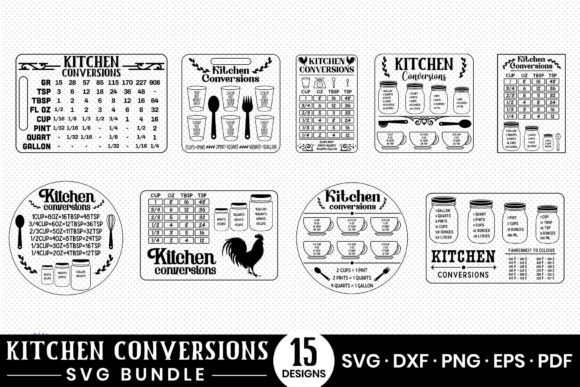
Kitchen Conversions SVG Bundle: Crafts & Graphics for Warm, Handmade Branding
As a graphic designer who’s built visual identities for artisanal food brands, local bakeries, and Etsy-based kitchenware lines, I opened The Kitchen Conversions SVG Bundle expecting charm—and found something more practical: a tightly curated set of 15 cohesive illustrations centered on jars, spoons, whisks, and measuring cups. This isn’t generic clipart. It’s a considered graphic design asset with consistent line weight, balanced negative space, and subtle textural nuance—ideal for projects where warmth, authenticity, and craft-driven storytelling matter.
A First Impression That Sets the Mood—Not Just the Theme
The bundle immediately evokes a handmade business aesthetic: approachable but intentional, nostalgic without being dated. The illustrations lean into soft organic curves and gentle imperfections—think hand-drawn precision rather than rigid vector geometry. That makes it a natural fit for a real client project I recently scoped: a seasonal “Spring Preserves” campaign for a small-batch jam brand launching at a regional farmers’ market. We needed marketing visuals that felt personal, ingredient-forward, and tactile—not clinical or mass-produced. The Kitchen Conversions SVG Bundle delivered that tone instantly.
Where It Shines in Real Client Work
This design bundle excels in contexts where emotional resonance matters more than stark minimalism. In packaging design, the jar and spoon motifs anchor product labels with instant category recognition—no copy needed. On tote bags and mugs, scaled up as hero graphics, they hold visual weight without overwhelming. For social media graphics, especially Instagram posts and Pinterest pins, the illustrations pair beautifully with warm-toned photography and short, evocative copy—enhancing engagement without competing for attention.
It also works exceptionally well inside Canva templates and Cricut projects. As a sublimation design or sticker design, the clean outlines and generous spacing ensure crisp heat-transfer results. When layered over textured backgrounds—kraft paper, linen, or watercolor scans—the illustrations retain clarity while adding depth. And for printable design clients (think recipe cards, workshop handouts, or boutique gift tags), the SVG and PNG files scale flawlessly from 4×6” printables to large-format posters.
Where to Use It With Intention—Not Assumption
That said, this is not a universal asset. In logo design or core brand identity systems requiring extreme versatility, its illustrative specificity limits flexibility. It shouldn’t anchor a primary logo—but it’s perfect as a supporting element in a secondary mark or pattern repeat. Similarly, avoid using it in professional corporate materials (e.g., investor decks or B2B whitepapers) where neutrality and scalability are non-negotiable.
On crowded layouts—like multi-product product mockups or dense editorial spreads—it can visually compete unless carefully isolated. And at very small sizes (<5mm height), fine details like whisk tines or spoon handles may blur or disappear. It also struggles against low-contrast or busy backgrounds unless paired with a solid color overlay or drop shadow—so always test contrast on both light and dark surfaces.
How It Shapes Perception—Beyond Decoration
Used thoughtfully, The Kitchen Conversions SVG Bundle strengthens visual hierarchy by guiding the eye toward warmth and familiarity. It builds visual trust through recognizability—viewers instantly associate the icons with cooking, care, and craftsmanship. That emotional appeal directly supports audience engagement for lifestyle brands, food bloggers, and print-on-demand sellers targeting home cooks and DIY enthusiasts.
But it doesn’t automatically guarantee professionalism—how you use it does. Pairing it with a tight sans serif (like Inter or Poppins) creates modern balance; pairing it with a heavy script font risks visual clutter. Its strength lies in contrast: let the illustrations breathe beside clean typography and ample whitespace. That’s how it elevates rather than dilutes small business branding.
Practical Designer Notes Before You Commit
Before dropping these into a client file, I run five quick checks:
- Test in black and white: Confirm legibility and silhouette integrity—no hidden gaps or unintended joins.
- Preview at multiple sizes: Zoom out to 25% to assess layout impact; zoom in to 400% to inspect stroke consistency and corner sharpness.
- Place on real mockups: Drop SVGs onto actual mug, label, and tote bag mockups—not just flat previews—to gauge proportion and context.
- Verify file integrity: Open SVGs in Illustrator to confirm editable paths and grouped layers; check PNGs for clean alpha channels and no stray pixels.
- Confirm commercial licensing: Ensure the commercial license explicitly covers your client’s use case—especially for Etsy product listings, digital downloads, or physical goods sold via print-on-demand platforms.
Final Verdict: A Thoughtful Asset for Human-Centered Design
The Kitchen Conversions SVG Bundle won’t solve every design challenge—but it solves a very specific, very common one: how to communicate craft, care, and culinary joy without cliché. For designers building marketing visuals for handmade businesses, developing editorial design for food zines, or creating web design assets for a cozy blog theme, it’s a reliable, mood-aligned creative design shortcut. It’s not flashy. It’s not trend-chasing. It’s quietly competent—exactly what many small business clients need to feel seen, supported, and authentically represented.
If your next project calls for warmth over wow, familiarity over novelty, and intention over ornamentation, this SVG design bundle earns its place in your working toolkit—not as filler, but as functional, feeling-first design assets.