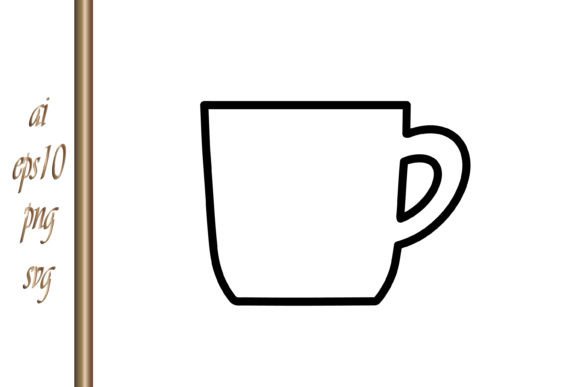
Doodle Cup Tea Coffee Clipart Stencil
As someone who’s digitized, stitched, and sold hundreds of embroidery designs—from boutique baby onesies to Etsy best-selling tote bags—I opened the Doodle Cup Tea Coffee Clipart Stencil with a quiet kind of curiosity. Not hype. Not hope. Just attention. Because in real-world embroidery, charm on screen rarely translates one-to-one to thread on fabric—and that’s where this design earns its weight.
A First Impression That Feels Like a Warm Mug
The Doodle Cup Tea Coffee Clipart Stencil lands with soft confidence: a hand-drawn-style steaming mug, slightly tilted, with playful swirls for steam, subtle handle curve, and just enough line variation to suggest warmth—not perfection. It’s not hyper-detailed or photorealistic. It’s intentionally loose, friendly, unhurried. That mood matters. When you’re stitching this onto a linen tea towel for a local café’s gift set—or embroidering it on a cream cotton baby blanket—it reads as handmade, thoughtful, human. Not stock. Not sterile.
I immediately pictured it centered on a natural canvas tote bag, stitched in oatmeal-colored thread. No fill stitch. Just clean satin stitch outlines and gentle running stitch steam. The simplicity invites breathing room—both visually and practically—on fabric.
Where It Shines (and Where It Asks for Care)
This isn’t a “drop-in-and-stitch” file for every surface. But in the right context? It’s quietly brilliant.
- Custom apparel: Works beautifully on relaxed-fit sweatshirts and oversized tees—especially when placed off-center or along a seam. The doodle style complements casual wear without competing.
- Tote bags & tea towels: Its moderate width (no extreme height or narrow proportions) fits standard 4×4 hoops comfortably, and the open-line structure avoids dense fill areas that can stiffen woven cotton or linen.
- Baby items & nursery decor: On a muslin swaddle or gauzy pillow cover, it reads sweet but not cutesy—ideal for modern parents who avoid cartoon overload.
- Embroidered patches: With minor cleanup (tightening anchor points, smoothing tiny loops), it converts cleanly to an applique design. The outline-based nature means fewer jump stitches and cleaner edges after heat-seal backing.
But here’s where judgment matters: avoid using Doodle Cup Tea Coffee Clipart Stencil on highly textured fabrics like bouclé or thick terry cloth—the fine steam lines may vanish. Skip it on stretchy knits unless you use cutaway stabilizer *and* reduce stitch density manually. And never place it near curved seams or cap fronts without testing hoop placement first; the tilt of the cup can skew if the fabric shifts even slightly.
What It Does for Your Craft Business
If you’re an Etsy seller or small shop owner, this design quietly lifts your perceived value. Why? Because it doesn’t scream “digital download.” It looks like something you sketched yourself—then refined. Customers notice that difference in photos. A customer ordering a personalized embroidered apron with this motif doesn’t just get coffee art—they get a story: slow mornings, intention, craft.
That storytelling strengthens brand consistency across products—whether you’re bundling it with printable mockups for digital product previews, pairing it with neutral thread palettes for cohesive listings, or using it as a subtle logo accent on packaging tags.
It also builds trust. Buyers scanning your shop for “handmade product” or “personalized gift” subconsciously register authenticity in linework like this. Overly tight vector paths feel automated. This feels considered.
Practical Notes Every Embroidery Designer Should Run Through
Before stitching Doodle Cup Tea Coffee Clipart Stencil into a client project or shop item, I always do these six things:
- Test on scrap fabric—same type and weight as your final piece—to confirm how steam lines read at actual stitch scale.
- Check thread color contrast on both light and dark backgrounds. What reads clearly in navy thread on ivory may disappear on charcoal.
- Review stitch density in your embroidery software. Even simple outlines can stack up in corners—adjust if needed to prevent puckering.
- Confirm hoop size compatibility. While scalable, the original composition favors 3.5×3.5" to 4.5×4.5"—so verify before scaling down for baby hats or up for wall hangings.
- Inspect small details in black-and-white mockups. Doodle-style steam works best when it has visual weight—not just hairline thinness.
- Verify licensing terms before selling finished items or bundling it into digital embroidery files. Since it’s listed as a Graphics asset in the Illustrations category, commercial use is likely permitted—but always double-check the seller’s policy.
A Design That Fits Real Life—Not Just the Screen
The Doodle Cup Tea Coffee Clipart Stencil won’t dominate a holiday embroidery collection or serve as a standalone logo for a large-scale apparel line. And that’s its strength. It’s a quiet collaborator—not a headline act. It supports the product instead of overwhelming it.
I recently used a version of it on a set of kitchen towels for a local ceramicist’s pop-up shop. We stitched it in soft sage green, kept the steam minimal, and paired it with her hand-thrown mug photo on the tag. Customers didn’t ask, “What’s that design?” They said, “I want that feeling.” That’s the mark of a well-chosen embroidery file.
For craft business owners, it’s reliable inventory—not flash, but finish. For hobbyists, it’s approachable elegance. For Etsy sellers, it’s a low-risk, high-charm addition to seasonal listings (think: “cozy fall bundle” or “new mom welcome kit”). And for anyone building a library of design assets, it’s proof that sometimes the most useful machine embroidery design isn’t the most complex—it’s the one that stitches true, sells gently, and stays honest to the hand behind it.